

Blog
A Turn in the Road
Sharing lessons in how to live. Ralph Ellison in Harlem in 1966. Photograph Copyright © by David Attie/Getty. A gun in hand knows no friend. John King, How Many More? IT FEELS LIKE we’ve reached a bend in the river, a turn in the road. For 2024, Barbados recorded a total of 49 homicides, the
Sharing lessons in how to live. Ralph Ellison in Harlem in 1966. Photograph Copyright © by David Attie/Getty.
A gun in hand knows no friend.
John King, How Many More?
IT FEELS LIKE we’ve reached a bend in the river, a turn in the road.
For 2024, Barbados recorded a total of 49 homicides, the majority of them gun-related. The number was the highest on record and alarming for a population of roughly 283,000 unaccustomed to the audacious violence that often accompanied the crimes. With the death March 25th of 13-year-old Shawnathon Chase, a spectator shot at a netball game in his community when reportedly two gunmen opened fire on the crowd, the numbers for 2025 are so far 12 murders in 13 weeks. There’s been no discernible reason for the attack. Chase was by all accounts a well-behaved boy who enjoyed sports and got along with others. The incident seemed as random as it was senseless.
Except most of the killings have been of young people, or people far younger than I am, so our problems have been youth-related. With this and other violence apparently unabating in our society, I’ve been asking myself what I can do as father, citizen and artist to help defuse this powder keg. I’ve been calling on age, experience and the ancestors for guidance.
The Montreal diasporas of my youth, during the 70s and 80s, were no less violent in their own way. There was less tolerance and more ignorance about diverse people and their reality then, the same type of tempers and temperaments as now. Certainly, there were guns available, circulating even in our presumably safe, sleepy corner of North America. Some we saw, most we didn’t. My friends and I, Black and White and other, were nonetheless faced with the choice all young people, throughout all the ages, are faced with in hardening circumstances.
The answer was, or seemed, obvious to us: torture or be tortured. Lash out first or be destroyed by someone else’s pain. Fight with all the pain you felt on the inside until you drew blood… unless you were presented with another way, a way out. That turn in the road.
That turn would be some time in coming. After the Rodney King Riots of the spring of 1992, a six-day conflagration sparked by racism and violence and a sense of hopelessness, of powerlessness in people, King’s “Can we all get along?” plea became an existential question for all kinds of communities suffering the same despair. A despair that was fuelled by a lack of understanding of the world, of our place in it, and how that world could be made different, meaning better through our own agency through what I would call empathetic imagination.
That despair, clearly, is still with us. It’s not hard to see why. We live in an age when the president of the United States would seek to eliminate the Institute of Museum and Library Services (IMLS), among other similar federal agencies that provide hundreds of millions of dollars in grants to libraries, museums and related institutions across the country and its territories. These funds support everything from internship and fellowship programs to new curricula for groups of visiting schoolchildren. Trump signed the executive order to defund the IMLS on March 14th.
But our problems are the world’s problems, and vice versa. Vigilance. Lest we forget. At home, we’re still grappling with education reform and declining public library use in what is essentially a one-party state with only one national newspaper and an identifiable link between declining literacy among boys and violence in schools.
The defunding of our libraries is a real concern. Books helped to raise me. I didn’t know they were doing that at the time, but books helped me to grow up and live in and understand the world around me, cruel as it was. They helped me to find expression for my own dreams and hopes and frustrations, and with it not just the possibility but the ability to make my reality better.
I say books, but I’m talking all kinds of reading: Marvel and DC comics; paperback short fiction; non-fiction in the form of newspaper magazines and the ones my older brothers bought, like GQ and Esquire; and poetry in the shape of the music albums they listened to, Muddy Waters and Elton John, The Who and Stevie Wonder. Why did those days ever have to go?
I think of Ralph Ellison, author of the iconic Invisible Man, and his observations on Hemingway in an interview published in The Paris Review (Spring 1955) and republished in Shadow and Act:
“…I read him to learn his sentence structure and how to organize a story. I guess many young writers were doing this, but I also used his description of hunting when I went into the fields the next day… When he describes something in print, believe him… he’s been there.”
It’s that last comment that gets me: he’s been there. It implies trust. Ellison was saying you could learn real, practical things about life and living, about building and getting along, from reading a novel, a poem, or seeing a play or painting.
That’s a powerful discovery. More powerful than any gun.
2
“IS A POEM ENOUGH to heal a bleeding world?” asked Winston Farrell in a Sunday check-in call to me yesterday evening.
My answer was, “It also takes us.”
Books, not bullets, seized me from the moment I was a young boy able to listen to stories. Their grip doubled when I learned to read for myself. It grew exponentially when I began to write.
There is value in writing books, and in writing a good book or poem. But age and experience have shown me that act must be balanced with other forms of activism.
Because something quite other than books has taken hold of our young people. This happened not yesterday, but as the result of long-term apathy and neglect.
Over the years, I’ve turned to writers and artists for guidance and example. There is work our young can trust and respect, stories that build them up for taking care of themselves and this world. But only if they are offered those stories. Who is leading them there?
Too often, parents place a device in a child’s hands instead of a book, to pacify them. And then we wonder why our children are emotionally absent, intellectually disengaged, and unaware of their own history.
The maintenance of literacy programs, the institution of Bajan literature classes, increased public library funding, and the inclusion of the arts in public life as policy rather than afterthought are choices we must make to build a safer society.
The works of writers, dancers, actors, and artists have reminded me every day that I have choices. It may be too late for some. But we are losing too many by not reaching them early with the tools we already have. Books and art that teach hope instead of despair.
Robert Edison Sandiford is the cofounding editor with poet Linda M. Deane of ArtsEtc Inc. He is the author of several award-winning books and graphic novels.
Read more by Robert at
dcbooks.ca
nbmpub.com
writersunion.ca/member/robertedison-sandiford
Please see also:
https://www.artsetcbarbados.com/blog/crime-adichie-time-out?page=5
https://www.artsetcbarbados.com/blog/crime-adichie-time-out?page=6
https://www.artsetcbarbados.com/news/2023-indylist
https://www.artsetcbarbados.com/news/2024-indylist
Further reading:
Amy, Jeff. “More states move to ban cellphones in school as Georgia is latest to act.” The Associated Press. Last modified March 25, 2025.
https://apnews.com/article/georgia-school-cellphone-phone-ban-tennessee-utah-f633d3001a9d634269aa68db258184ee
Ellison, Ralph. Shadow and Act. New York: Vintage, 1995.
“Gun trend.” Daily Nation, April 8, 2025.
Greaves, Tre. “At 13, they cut my son’s life, cries dad.” Daily Nation, March 27, 2025.
Greaves, Tre. “Criminologist has concerns about youth.” Daily Nation, December 26, 2024.
The Learning Network. “Rodney King Asks, ‘Can We All Get Along?’” The New York Times. Last modified May 1, 2012.
https://archive.nytimes.com/learning.blogs.nytimes.com/2012/05/01/may-1-1992-victim-rodney-kings-asks-can-we-all-get-along/
“Library sees drop in readership among youth.” Midweek Nation, February 19, 2025.
Mounsey, Colville. “Link to violence seen: Declining literacy among boys ‘big factor’ in school unrest.” Daily Nation. Last modified March 17, 2024.
“Red flag raised: Researcher: Youth in gun crime at crisis level.” Daily Nation, November 21, 2024.
Sutton, Benjamin. “Trump signs executive order to ‘eliminate’ agency that funds museums and libraries.” The Art Newspaper. Last modified March 17, 2025.
https://www.theartnewspaper.com/2025/03/17/president-trump-executive-order-institute-museum-library-services-wilson-center
Swit, Cara, Aaron Hapuku, Helena Cook, and Jennifer Smith. “New Zealand banned phones in schools 12 months ago. Here’s what happened.” The Independent. Last modified April 3, 2025.
https://www.independent.co.uk/news/world/australasia/new-zealand-mobile-phone-ban-schools-b2726528.html
Last Modified: May 31, 2025
More About the Author
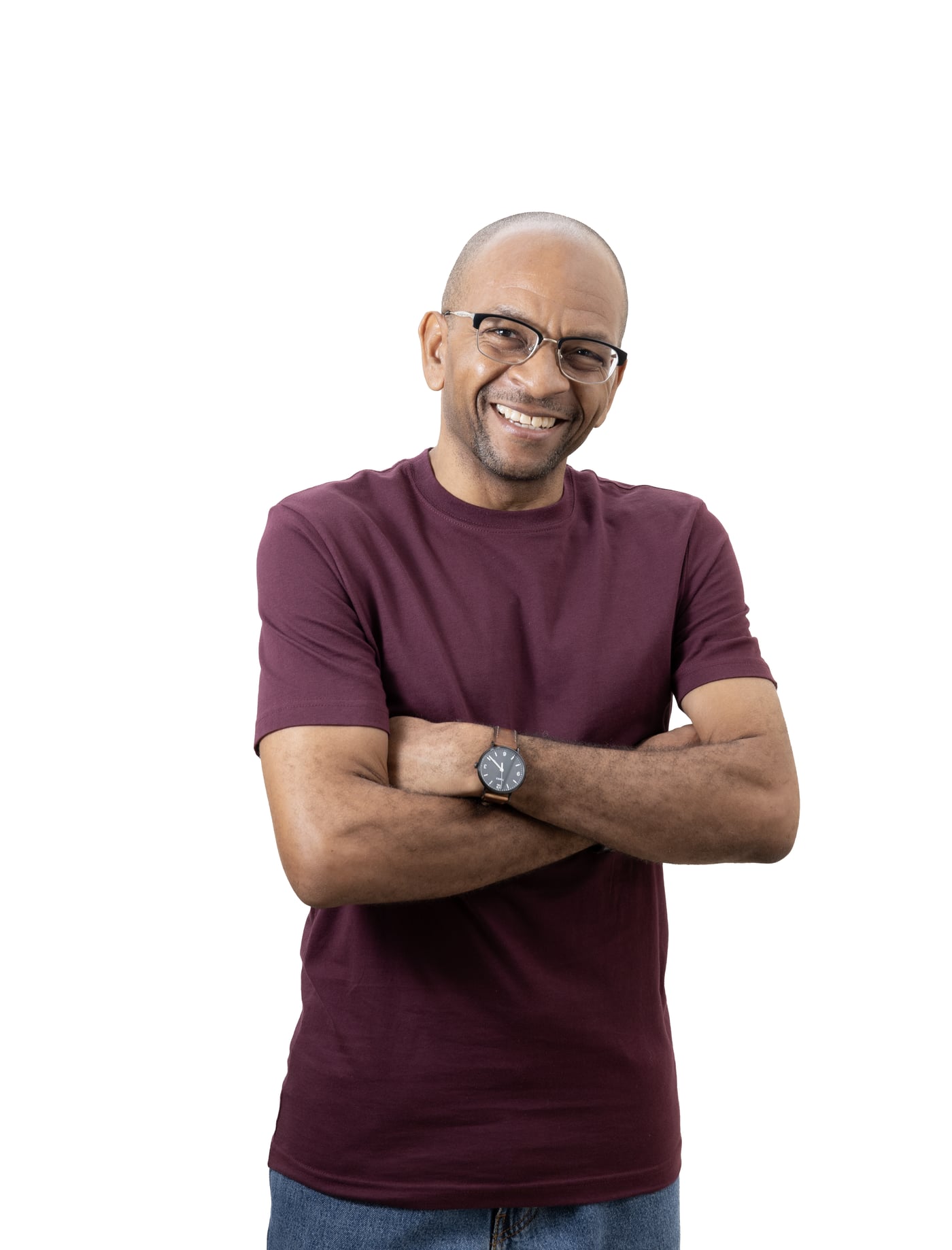
Robert Edison Sandiford
Robert Edison Sandiford is a Barbadian-Canadian writer, journalist, and co-founder of ArtsEtc Inc. His fiction, non-fiction, and graphic novels have appeared in publications across Canada, the US, the UK, and the Caribbean.
Read Full Bio →Continue Reading
![Spice of Life - a perfect venue for 4 Love of Barbados over Independence weekend. [Photo: Vaughn Renwick]]](https://admin.artsetcbarbados.com/wp-content/uploads/2024/12/4lb-sol_setting.jpg)

